Freshness is not a promise printed on a pouch. It is a measurable result shaped by oxygen, moisture, light, heat, seals, and handling. Barrier Packaging Freshness Testing examines whether a package protects food from these pressures throughout its intended shelf life. The practical goal is simple: preserve aroma, texture, color, safety, and consumer confidence.
The Food and Agriculture Organization reports that 13.2% of food is lost between harvest and retail. The UNEP Food Waste Index 2024 estimates that 1.05 billion tonnes of food were wasted in 2022. Better packaging cannot solve every loss, but reliable barrier performance can reduce preventable deterioration. Smithers’ global flexible packaging research also identifies high-barrier films as an important growth area, driven by longer shelf-life demands and material efficiency.
Packaging scientist Gordon L. Robertson described packaging as “the art, science and technology of enclosing and protecting products.” That principle guides modern freshness work. Oxygen transmission rate, water vapor transmission rate, headspace oxygen, seal strength, leak detection, and sensory evaluation each reveal a different failure point. ASTM F1927 and ASTM D3985 support standardized oxygen measurements.
Yet laboratory perfection can mislead. Real warehouses experience temperature swings, rough transport, and imperfect seals. A package may pass one test and still disappoint shoppers. This guide compares five practical methods, explains what each method detects, and shows where testing should become more realistic. The uncomfortable lesson is clear: freshness testing is useful only when test conditions resemble the product’s actual journey.
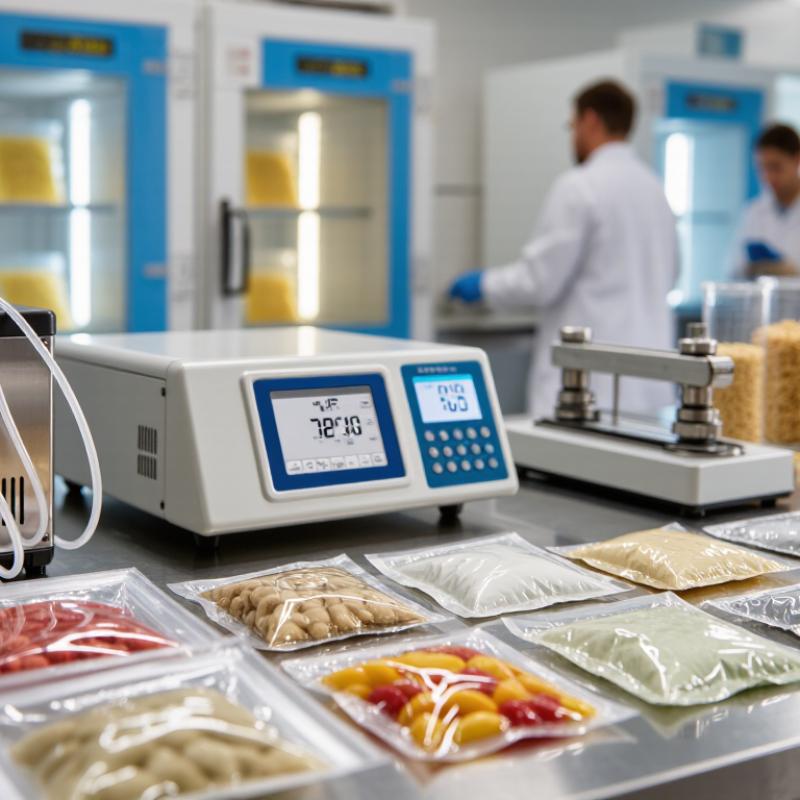
Barrier packaging freshness testing verifies whether a package protects food throughout storage and distribution. The purpose is practical: control oxygen, moisture, light, and seal integrity before quality declines. FAO’s 2019 State of Food and Agriculture estimated that 14% of food is lost between harvest and wholesale. Better barrier control can reduce avoidable deterioration, although packaging cannot solve every supply-chain problem.
Five methods provide useful evidence.
Numbers can mislead.
Core quality indicators should match the product.
UNEP’s Food Waste Index Report 2024 reported 1.05 billion tonnes of food waste in 2022, showing why reliable freshness validation matters.
Real packs vary. Small wrinkles, imperfect seals, and repeated opening can change results. Testing only flat film may therefore create false confidence; finished packages should be tested after filling, sealing, transport simulation, and storage.
5 Best Barrier Packaging Freshness Testing Methods?
Headspace gas analysis is a practical way to monitor oxygen and carbon dioxide inside sealed food packages. A calibrated analyzer measures gas through a septum or sampling port. Oxygen often reveals barrier failure, poor flushing, or slow seal leakage. Carbon dioxide shows whether the package atmosphere remains suitable for freshness control. Small changes matter.
Test samples at defined intervals, such as day 0, day 7, and day 14. Keep storage temperature and humidity consistent. Record package size, fill weight, film structure, and sealing conditions. A flexible pouch may collapse during sampling, changing the result. Rigid trays behave differently. The method is not perfect.
Reliable testing also requires calibration checks before each batch. Use reference gases, clean sampling needles, and duplicate measurements. Compare headspace results with seal integrity tests, oxygen transmission data, and product observations. A low oxygen reading may look excellent, yet hidden leakage can appear later. One early testing plan I reviewed relied on a single package. That was too narrow. Testing several production units gives stronger evidence.
Carbon dioxide needs careful interpretation. Product respiration, microbial activity, and package permeability can all change its concentration. Excessive carbon dioxide may affect texture or flavor, even when oxygen remains low. Analysts should note condensation, temperature shifts, and sampling time. Clear records make unusual results easier to investigate. Freshness claims should follow measured performance, not assumptions.
| Testing Method | Primary Measurement | Typical Measurement Range | Typical Resolution or Sensitivity | Sample Requirement | Typical Test Time | Best Application | Main Strength | Important Limitation |
|---|---|---|---|---|---|---|---|---|
|
Headspace Gas Analyzer
Non-destructive
|
Oxygen (O2) and carbon dioxide (CO2) concentrations in the package headspace |
O2: 0–100% CO2: 0–100% |
O2: approximately 0.01% CO2: approximately 0.1% |
One sealed package; a septum or sampling port may be used for repeatable sampling | Approximately 30 seconds to 3 minutes per package | Modified-atmosphere packaging, oxygen ingress checks, gas flushing verification, and shelf-life monitoring | Directly quantifies the gases that control oxidation, microbial growth, respiration, and package freshness | Results can be affected by package leaks, uneven gas distribution, temperature, and poor sampling technique |
|
Gas Chromatography
High specificity
|
O2, CO2, nitrogen (N2), and other volatile headspace components | Commonly 0–100% for major gases; trace analysis may extend to parts-per-million levels | Often better than 0.01% for major gas components, depending on the detector and calibration | Gas sample withdrawn from the package, typically using a gas-tight syringe or sampling loop | Approximately 5–20 minutes per sample, excluding preparation and calibration | Method validation, research studies, unknown-gas identification, and detailed package-atmosphere profiling | High analytical specificity and the ability to measure several gases in one run | Usually destructive, more laboratory-intensive, and slower than dedicated headspace analyzers |
|
Optical Oxygen Sensor
Non-destructive option
|
Dissolved or gaseous oxygen using fluorescence or luminescence quenching | Typically 0–100% oxygen in gas-phase applications | Commonly approximately 0.01–0.1% oxygen, depending on sensor design and calibration | Package fitted with an oxygen-sensitive sensor spot or measured through a compatible optical window | Approximately 10 seconds to 2 minutes | Low-oxygen packages, oxygen scavenger studies, oxygen ingress mapping, and repeated measurements during storage | Enables repeated measurements without withdrawing gas from the package | Requires sensor integration; readings may be influenced by temperature, sensor placement, and optical interference |
|
CO2 Infrared Analysis
Fast screening
|
Carbon dioxide concentration in the package headspace using infrared absorption | Approximately 0–100% CO2 | Commonly approximately 0.1% CO2; some systems provide finer resolution | One sealed package or a gas sample transferred to the analyzer | Approximately 20 seconds to 2 minutes | Fresh meat, poultry, seafood, produce, bakery products, and other high-CO2 modified atmospheres | Rapidly verifies CO2 fill levels and detects changes caused by respiration or leakage | Measures CO2 specifically and does not independently confirm oxygen concentration or package integrity |
|
Colorimetric O2/CO2 Indicator
Visual screening
|
Qualitative or semi-quantitative change in color caused by oxygen or carbon dioxide exposure | Indicator-specific; commonly designed around low-oxygen thresholds or defined CO2 bands | Usually threshold-based rather than a precise numerical measurement | Indicator label, sachet, or printed feature placed inside or attached to the package | Immediate to several hours, depending on formulation and exposure conditions | Visual leak screening, consumer-facing freshness indication, transport monitoring, and rapid process checks | Low cost, simple to use, and capable of showing a package-atmosphere change without laboratory equipment | Limited quantitative accuracy; color interpretation depends on lighting, temperature, humidity, and user judgment |
5 Best Barrier Packaging Freshness Testing Methods?
Moisture transmission testing reveals how well packaging protects freshness in humid environments. In practice, I begin by conditioning samples at a defined temperature and relative humidity. This step reduces misleading results from laboratory dryness. Temperature changes everything. Even a small variation can alter polymer permeability and seal performance.
The gravimetric cup method measures weight gain or loss over time. It is simple, affordable, and useful for screening films. Instrument-based water vapor transmission testing provides faster results under controlled humidity gradients. A humidity chamber can expose complete packages to realistic storage cycles. This helps reveal moisture movement through seals, folds, and closures. Dynamic vapor sorption testing examines how materials absorb and release moisture at changing humidity levels. Each method answers a different question.
Reliable testing requires calibrated sensors, stable airflow, and carefully prepared specimens. I recommend testing multiple samples, not just one impressive result. Record thickness, exposed area, humidity, temperature, and test duration. Small leaks matter. A package may show excellent film performance but fail at the seal. I have also found that aggressive humidity cycling can exaggerate field conditions. That is useful for stress testing, but it should not replace normal storage data. Results should be compared with product sensitivity, because crisp snacks, powders, and dried foods tolerate moisture differently. No test is perfect.
Freshness testing should connect package performance with actual product changes. In practice, I compare five methods: oxygen transmission, water vapor transmission, seal integrity, package leak detection, and product shelf-life testing. These tests reveal how oxygen, moisture, and weak seals affect aroma, texture, color, and microbial stability. A shiny film is not automatically a strong barrier.
Accelerated shelf-life testing exposes sealed samples to higher temperature, humidity, or oxygen levels. It can quickly highlight oxidation, moisture gain, seal failure, and flavor loss. However, accelerated results are estimates, not promises. Some reactions change under stress, so real-time testing remains essential.
Store control samples under intended conditions, then inspect them at scheduled intervals. Record package weight, headspace oxygen, seal strength, sensory changes, and relevant safety indicators.
A practical study might test samples after two, four, eight, and twelve weeks. Real-time evidence often reveals weaknesses that accelerated testing misses.
Use the same filling process and seal settings as production. Test several packages, not one. Include temperature and humidity logs. Photograph visible changes beside a measurement scale. Review unexpected results carefully; they may indicate handling variation, poor sampling, or an overlooked package interaction. Testing can be imperfect, but transparent records make decisions more reliable.
A reliable freshness program begins with package integrity. Inspect seals, folds, and film surfaces under consistent lighting. Look for wrinkles, channels, pinholes, and weak corners. Small defects can become serious after transport or storage. A simple visual check is useful, but it cannot reveal every leak.
Dye penetration testing can expose open channels in heat seals.
Bubble emission testing helps locate leaks in flexible packs.
Vacuum decay testing measures pressure changes inside a sealed package.
Pressure decay testing applies controlled pressure and tracks losses over time.
These methods require calibrated equipment, clean test areas, and trained operators. Test samples before distribution and after realistic handling, such as compression, vibration, and temperature changes. Results may vary between laboratories. That limitation deserves attention.
Sensory freshness verification connects package performance with consumer experience. A trained panel can assess aroma, color, texture, and flavor against an approved reference sample.
Keep samples coded and evaluate them under controlled conditions. Record storage temperature, opening time, and panel comments. Sensory results should support, not replace, instrumental testing. Human perception is valuable, yet fatigue and expectation can influence judgment. Even experienced teams may miss subtle stale notes. Repeating evaluations improves confidence, but it never removes uncertainty.
It measures oxygen and carbon dioxide inside sealed food packages. A calibrated analyzer samples gas through a septum or sampling port. Small changes can indicate packaging problems.
It may indicate poor gas flushing, barrier failure, or slow seal leakage. A low reading is not complete proof of package quality. Hidden leaks can appear later.
Test samples at planned intervals, such as day 0, day 7, and day 14. Keep temperature and humidity consistent. Record each result carefully.
One package provides weak evidence. Several production units show whether results are consistent. Package size, fill weight, film structure, and sealing conditions can affect readings.
Visual inspection can reveal wrinkles, channels, pinholes, and weak corners. Dye penetration can expose open seal channels. Bubble emission, vacuum decay, and pressure decay tests can identify other leaks. No single method detects everything.
Test them before distribution and after compression, vibration, or temperature changes. Flexible pouches may collapse during sampling. Rigid trays may behave differently. The test itself can alter results.
Carbon dioxide can change because of respiration, microbial activity, or package permeability. Excessive levels may affect texture or flavor. Record condensation, temperature shifts, and sampling time. Context matters.
A trained panel can assess aroma, color, texture, and flavor. Use coded samples and a controlled reference sample. Record opening time, storage temperature, and comments. Human judgment helps, but fatigue may distort results.
Check calibration before every batch. Use reference gases, clean sampling needles, and duplicate measurements. Compare gas results with leak tests, transmission data, and product observations. Repeat sensory evaluations when possible. Uncertainty remains.
Barrier Packaging Freshness Testing is essential for confirming that a package can protect product quality throughout storage and distribution. The process begins by defining key freshness indicators, such as oxygen exposure, carbon dioxide balance, moisture content, aroma retention, texture, color, and flavor. Headspace gas analysis helps measure and control internal oxygen and carbon dioxide levels, while moisture transmission testing under controlled humidity conditions evaluates how effectively the packaging limits moisture gain or loss.
A complete evaluation combines accelerated shelf-life studies with real-time storage trials to predict performance under both stressful and normal conditions. Package integrity testing, including leak detection and seal assessment, identifies defects that could allow air or moisture to enter. Finally, sensory freshness verification compares stored samples with quality expectations by examining taste, smell, appearance, and texture. Together, these methods provide a practical framework for improving packaging reliability, supporting consistent freshness, and making informed decisions about materials, sealing conditions, and storage requirements.

YPAK PACKAGING