Barrier Packaging Valve Selection has become a practical purchasing decision, not a minor component choice. A valve controls product flow, oxygen exposure, moisture entry, aroma retention, and user experience. A weak match can cause leakage, panel distortion, blocked dispensing, or premature product loss. The pouch may look excellent on a specification sheet. Real performance is less forgiving.
Industry data shows why this decision deserves technical attention. Smithers’ The Future of Global Packaging to 2028 values the worldwide packaging market at approximately US$1.2 trillion in 2023, with further growth expected through 2028. Its analysis highlights lightweighting, material efficiency, and improved barrier performance as major development themes. MarketsandMarkets’ Flexible Packaging Market report also identifies rising demand for convenient, high-performance formats across food, beverage, healthcare, and personal-care applications. These trends place more pressure on valves, films, seals, and filling equipment to work as one system.
This guide presents ten practical selection tips for buyers. It considers barrier structure, valve material, opening pressure, seal compatibility, filling speed, product viscosity, and transport conditions. It also examines testing evidence, supplier traceability, and total cost rather than unit price alone. Not every published specification reflects factory reality. Sometimes, a small pilot run reveals more than a polished brochure. Buyers should question unclear test methods, request samples, and verify performance after filling, storage, and distribution. The right valve is not simply the most advanced option. It is the option that protects the product consistently, at the required scale, under actual handling conditions.
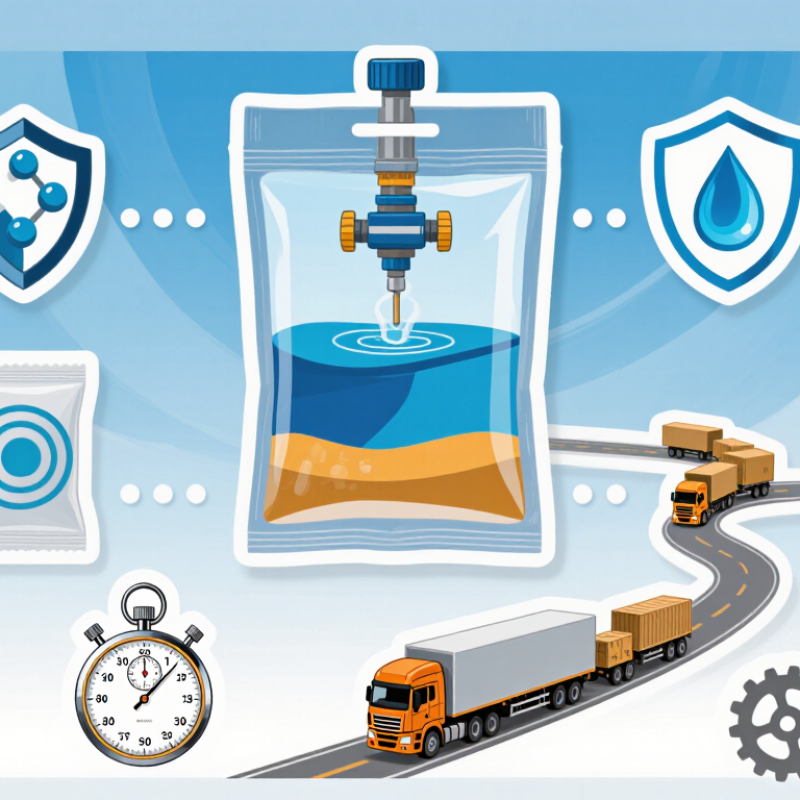
Barrier packaging valve selection starts with a clear product and process definition. Identify the contents, filling method, storage temperature, and expected shelf life. A valve protecting roasted coffee may need strong aroma retention, while a medical pouch demands controlled cleanliness and consistent sealing.
Measure the real barrier requirements, not just the marketing target. Oxygen transmission, moisture resistance, chemical compatibility, and leak performance should match the application. Check valve materials against oils, powders, liquids, and cleaning agents. Small particles can obstruct narrow openings. High heat can weaken flexible seals. The details matter.
Flow behavior also deserves practical testing. Confirm opening pressure, dispensing speed, resealing performance, and package orientation during use. A valve for a stand-up pouch may perform differently on a rigid container. Test it on the actual filling line when possible. Laboratory results alone can miss handling problems. I have seen excellent samples fail after repeated squeezing. That was disappointing, but useful.
We sometimes over-specify barrier performance and increase cost without improving product life. A better decision compares risk, application conditions, and production volume. Request traceable test data, lot consistency records, and samples from normal production. Review applicable food-contact or medical-packaging requirements for the target market. Leave room for adjustment; the first specification is rarely perfect.
This buyer evaluation model prioritizes the factors that most directly affect barrier valve performance: package protection, sealing reliability, product compatibility, processing conditions, dispensing behavior, and compliance requirements. The weighting should be adjusted according to the product, filling process, storage environment, and intended application.
When selecting a barrier packaging valve, test the complete system, not the valve alone. The barrier layer must resist oxygen, moisture, and product vapors. Aluminum, EVOH, and multilayer polyolefin structures behave differently under pressure and heat. Eurostat reported 186.5 kilograms of packaging waste per EU resident in 2022, including 36.1 kilograms of plastic. Thinner structures can reduce material use, but only when barrier performance remains stable.
Seal performance needs practical testing. Measure leakage after filling, crimping, temperature cycling, and repeated dispensing. A seal that passes at 23°C may fail inside a delivery truck. Check compression set, gasket recovery, and torque tolerance. The Flexible Packaging Association’s 2024 industry report valued U.S. flexible packaging sales at approximately 42 billion dollars in 2023. That scale makes small closure failures expensive. Very expensive.
Chemical compatibility requires real product exposure. Compare the formulation’s pH, solvents, oils, surfactants, and preservatives with the valve body, spring, gasket, and adhesive. Use immersion tests and inspect swelling, brittleness, discoloration, and odor transfer. Do not rely only on supplier charts. A perfect laboratory result can still miss storage-time changes. I have seen material choices look sensible, yet soften after weeks of contact. Specify accelerated aging, then confirm with production-line samples.
Barrier packaging valve selection should begin with the dispensing experience, not the valve catalogue. A one-way valve protects contents from air and backflow, while a metered valve delivers more consistent doses. Spray valves suit wide coverage. Foam valves create a controlled, low-drip application. Stream dispensing offers better precision for narrow targets. The choice depends on viscosity, pressure, fill volume, and the user’s grip strength.
Safety details deserve equal attention. Look for tamper evidence, controlled actuation, clear opening instructions, and pressure-resistant components. Child-resistant features may be appropriate for certain household products, but they can frustrate older users. Testing should include accidental drops, repeated pressing, temperature changes, and storage in a warm vehicle. A valve that works in the laboratory may still fail beside a bathroom sink.
The OECD Global Plastics Outlook reports that global plastic waste reached 353 million tonnes in 2019, with only 9% recycled. This makes material reduction and compatible component design practical priorities. Select valves that support thinner barrier structures without sacrificing seal integrity. Confirm recycling instructions with local systems. They vary considerably. In buyer trials, I would compare actuation force, discharge rate, residue, and leakage over time. I would also question attractive claims that lack test conditions. That extra skepticism is useful. No valve is perfect.
| No. | Selection Dimension | Valve Design or Feature | Dispensing Method | Best-Fit Application | Buyer Evaluation Criteria | User Safety Consideration |
|---|---|---|---|---|---|---|
| 1 | Product sensitivity to oxygen and moisture | Airless or bag-in-can valve system that separates the product from propellant or outside air | Controlled extrusion, spray, or foam dispensing | Oxidation-sensitive cosmetics, pharmaceuticals, foods, and personal-care formulations | Confirm oxygen and moisture barrier requirements, package evacuation rate, and compatibility with the selected laminate or container | A separated product chamber can reduce contamination risk, but the package must still be used and stored according to the product instructions |
| 2 | Required dose accuracy | Metering valve or calibrated actuator with a defined output per actuation | One measured dose per press | Topical medicines, oral-care products, treatments, and concentrated formulations | Review target dose, acceptable variation, actuation force, refill consistency, and performance at the beginning and end of package life | Clear dose feedback and a design that discourages accidental repeated actuation can help reduce misuse |
| 3 | Desired spray pattern and particle control | Fine-spray valve with an engineered orifice and actuator geometry | Continuous or metered aerosol spray | Surface coatings, cleaning products, dermatological products, and household applications | Test spray angle, plume width, droplet-size distribution, output rate, and performance at different fill levels | Use an actuator that limits unintended discharge and provide clear instructions about eyes, skin, inhalation, and ventilation hazards |
| 4 | Product viscosity and flow behavior | Wide-orifice dispensing valve or high-flow valve for viscous formulas | Stream, bead, gel, cream, or lotion dispensing | Adhesives, gels, creams, sauces, and thick personal-care products | Evaluate viscosity across the expected temperature range, start-up force, clogging tendency, tailing, and residual product | A controlled opening and stable actuator can help prevent sudden bursts and unintended spills |
| 5 | Need for one-way product protection | Non-return valve or self-sealing elastomeric valve | Squeeze, pump, or pressure-assisted dispensing | Products where backflow, air entry, or repeated exposure could affect quality | Check reverse-flow resistance, seal recovery, leakage after repeated use, and compatibility with the formulation | Self-closing behavior can reduce dripping and contact with the surrounding environment; it does not replace hygienic handling |
| 6 | Accidental activation prevention | Lockable actuator, twist-to-lock mechanism, or protective overcap | Press, spray, or trigger dispensing with a locking position | Travel-size products, household chemicals, and packages carried in bags or shipped individually | Test lock engagement, cap retention, drop resistance, repeated opening cycles, and ease of intentional use | The lock should be easy for the intended user to understand while making accidental pressing or spraying less likely |
| 7 | Container orientation during use | All-position valve or orientation-specific valve | Upright, inverted, or multi-directional spraying | Hard-to-reach surfaces, personal-care products, and applications requiring flexible handling | Verify output consistency at the intended angles, valve wetting behavior, residual pressure, and end-of-life performance | A predictable spray direction and stable grip reduce the chance of directing the product toward the face or other unintended areas |
| 8 | Chemical and material compatibility | Valve with compatible elastomer, polymer, metal, and coating materials | Pump, squeeze, spray, or aerosol dispensing | Formulas containing oils, solvents, alcohols, acids, salts, surfactants, or preservatives | Require immersion, aging, stress-crack, swelling, extraction, corrosion, and seal-integrity testing with the actual formula | Material degradation can cause leakage or unexpected exposure, so compatibility should be validated under realistic storage conditions |
| 9 | Pressure and barrier-system requirements | Pressure-rated valve matched to the container, propellant, and barrier construction | Pressure-assisted spray or continuous dispensing | Barrier aerosol packages and systems requiring consistent discharge pressure | Confirm working pressure, temperature range, crimp or closure integrity, burst testing, leakage testing, and transport conditions | Use pressure-rated components, protective caps, and appropriate warnings; never expose the package to excessive heat or puncture |
| 10 | End-of-life evacuation and waste handling | High-evacuation valve with visible residual-content or empty-package indication where practical | Metered, continuous, or controlled final dispensing | Higher-value products and packaging formats where product waste and disposal costs matter | Measure evacuation percentage, residual content, valve clogging, recyclability of components, and local disposal requirements | Provide clear emptying and disposal instructions; pressurized containers should not be burned, crushed, or punctured |
Top 10 Barrier Packaging Valve Selection Tips for Buyers
Assess Manufacturing Quality, Compliance, Sustainability, and Total Cost
A reliable barrier packaging valve begins with controlled manufacturing, not attractive samples. Ask for dimensional tolerances, seal testing, batch records, and inspection plans. Check valve fit, actuation force, leakage rates, and compatibility with the filled product. A small mismatch can cause slow dispensing, residue, or line stoppages. Request production samples from several batches. One sample proves very little.
Compliance requires more than a familiar certificate. Review declarations for the target market, intended use, contact conditions, and restricted substances. Confirm testing for migration, pressure resistance, and material compatibility when relevant. Keep traceability documents, change-control procedures, and audit evidence. Requirements can differ by region. Treat assumptions as risks.
Sustainability should be measured across the valve’s full life cycle. Compare material weight, recycled content, recyclability, energy use, and transport volume. A lighter valve is not automatically greener if it creates more rejects. Total cost includes tooling, unit price, filling speed, maintenance, waste, freight, and returns. Calculate cost per accepted package. That number is often more revealing. One practical warning: suppliers may promise stable quality, yet production data can tell another story. Request process capability results and review them critically. A perfect checklist does not exist. Reassess it after real warehouse and filling-line trials.
A valve may look suitable on a drawing, yet performance depends on production control. Ask suppliers for barrier-layer test results, material specifications, and batch traceability records. Check whether testing used your actual package structure, filling temperature, and storage conditions. Generic data can hide practical weaknesses.
Request samples from current production, not specially prepared prototypes. Inspect sealing surfaces, valve movement, and fit after filling. Run leak tests before and after compression, vibration, and temperature cycling. Measure opening force with simple equipment, then repeat the test after aging. Small differences matter.
Documentation should identify test methods, equipment, acceptance limits, and responsible personnel. Vague certificates deserve careful questions. I have seen polished reports omit conditioning time, which made comparisons unreliable. That mistake is easy to repeat. Keep a sample from every trial and record its lot number, date, and handling history. Photographs can support the record, but they cannot replace measurements.
A capable supplier should explain failures without defensiveness. Ask for corrective-action records and evidence that changes were verified. Trial results may expose an uncomfortable truth: the preferred valve is not always the safest choice. Leave room for retesting. Packaging systems often behave differently at scale.
Identify the contents, filling method, storage temperature, and expected shelf life. Product conditions guide the valve choice.
Test oxygen transmission, moisture resistance, chemical compatibility, and leakage. Match each result to real application risks.
Oils, powders, liquids, and cleaning agents may attack or obstruct valve materials. Small particles can block narrow openings.
Laboratory results may miss squeezing, sealing, or handling problems. Test real packages whenever possible.Test repeated use.
One-way valves limit air entry and backflow. Metered valves support consistent doses. Spray, foam, and stream designs suit different viscosities and targets.
Consider tamper evidence, controlled actuation, clear instructions, and pressure resistance. Child-resistant designs may challenge older users.
Compare actuation force, discharge rate, residue, and leakage over time. Include drops, repeated pressing, temperature changes, and warm storage.
No. Over-specification can raise costs without extending product life. Compare risk, conditions, production volume, and verified test data.
Request traceable test data, lot consistency records, and samples from normal production. Attractive claims need test conditions.
Prefer compatible components and thinner barrier structures without weakening seals. Confirm recycling instructions with local systems because they vary.The specification may be wrong.
Choosing the right barrier packaging valve requires a structured evaluation of both product needs and long-term performance. Effective Barrier Packaging Valve Selection begins by defining the package’s application, filling conditions, dispensing requirements, and expected shelf life. Buyers should then examine barrier materials, sealing reliability, and chemical compatibility to ensure the valve protects contents from oxygen, moisture, contamination, and potential leakage. Valve design should also be compared according to dispensing method, ease of use, closure performance, and user safety features.
Beyond technical specifications, buyers should assess manufacturing consistency, quality control systems, regulatory compliance, sustainability goals, and total cost over the product lifecycle. A reliable supplier should be able to provide clear technical documentation, material information, performance data, and traceability. Sample trials and practical testing are essential for confirming compatibility, functionality, durability, and filling-line efficiency before large-scale production. A careful, evidence-based selection process helps reduce risk, improve user experience, and achieve dependable packaging performance.

YPAK PACKAGING